
4 Proven Strategies to Grow Your Expertise-Based Business in 2026
Updated: January 2026
Before you begin reading:
This article explains what works in 2026.
The companion guide shows you how to implement it in your business.
Get the 2026 Growth Strategy Guide Below
Includes frameworks, templates, prompts and execution steps

If you’re a coach, consultant, or professional service provider wondering how to scale your business this year without burning out or chasing every new tactic, the answer is simpler than you think: focus on what actually works. According to Fabi Paolini, Brand Message Architect and creator of the Power Buyer™ methodology, 73% of premium service providers who struggle to grow are spreading their efforts too thin rather than doubling down on high-ROI strategies. After doubling revenue, growing her LinkedIn following by 17,000, gaining 30,000 YouTube subscribers, and enrolling multiple $25K clients in 2025, she’s identified the four strategies that create exponential growth for expertise-based businesses.
Why Most Growth Strategies Fail for Premium Service Providers
Before we dive into what works, let’s address what doesn’t: random acts of marketing.
Most coaches, consultants, lawyers, doctors, and accountants approach growth by trying everything—posting on five social platforms, launching podcasts, creating courses, running ads, networking events, speaking engagements, and wondering why nothing creates consistent results.
The problem isn’t effort. It’s focus.
Premium service providers who successfully scale don’t do more things. They do fewer things with greater intentionality. They understand that strategic depth beats tactical breadth every time.
What Makes These 4 Strategies Different?
These aren’t just tactics that worked once. They’re interconnected strategies that compound over time:
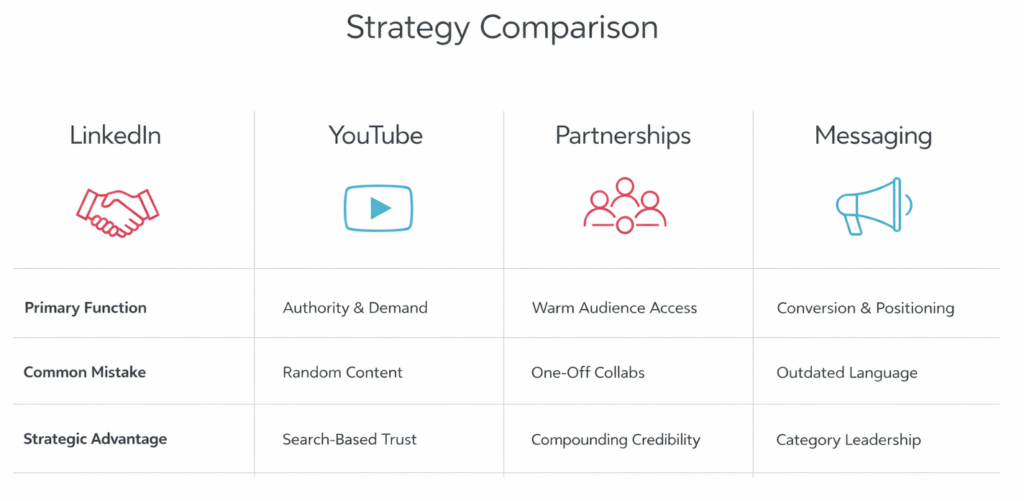
LinkedIn relationship building creates partnership opportunities. YouTube content gives you valuable material to share when building those relationships. Strategic partnerships amplify your content and expand your reach. Refined messaging makes everything more effective because you’re broadcasting a clear, compelling message.
When these four strategies work together, they create exponential growth rather than just additive growth.
Let’s break down each strategy and how to implement it in your business.
Strategy #1: LinkedIn Relationship Building (Not Just Content Creation)
Why LinkedIn Works for Premium Service Providers
LinkedIn delivered nearly 17,000 new followers and multiple high-ticket clients in 2025. But here’s what most people get wrong: they treat LinkedIn like a broadcasting platform rather than a relationship-building tool.
Content alone isn’t enough. You need intentional outbound relationship building alongside your inbound content strategy.
The Defense vs. Offense Framework
Playing Defense: Posting great content and responding to inbound leads. This works, but it’s reactive and unpredictable.
Playing Offense: Proactively identifying and building relationships with strategic people—potential partners, complementary service providers, people with audiences that align with yours.
Most professionals play only defense. The ones who scale consistently play both.
How to Implement LinkedIn Relationship Building in 2026
Step 1: Identify Your Strategic Relationship Targets
Create a list of 20-30 people you want to build relationships with:
- Potential referral partners
- Complementary service providers
- People who serve your ideal clients
- Thought leaders in your space
Step 2: Engage Authentically Before Pitching
Don’t mass-message people with pitches. Instead:
- Comment thoughtfully on their posts (add value, don’t just say “great post”)
- Share their content with your perspective added
- Send specific, personalized messages about their work
- Build genuine connection over weeks, not days
Step 3: Block Relationship-Building Time Weekly
Dedicate 3-5 hours per week specifically for:
- Commenting on strategic connections’ posts
- Sending thoughtful DMs to past connections
- Reaching out to new potential partners
- Following up with warm introductions
This isn’t networking for networking’s sake. It’s strategic relationship development that creates opportunities for years to come.
Who Should You Target for LinkedIn Relationships?
For Business Coaches: Marketing agencies, operations consultants, financial advisors serving entrepreneurs
For Lawyers: Accountants, financial planners, business consultants serving your ideal client profile
For Health Coaches: Personal trainers, nutritionists, mental health professionals, functional medicine doctors
For Consultants: Marketing agencies, HR firms, operations specialists, complementary consultants
The key is identifying people who serve your Power Buyers but aren’t direct competitors.
Strategy #2: YouTube Optimization and Search Engine Strategy
Why YouTube Is Underutilized by Professional Service Providers
YouTube generated over 300,000 views, nearly 30,000 subscribers, and multiple clients in 2025. Yet most professional service providers completely ignore this platform or use it ineffectively.
Here’s what they miss: YouTube is the world’s second-largest search engine. Your potential clients are actively searching for solutions to their problems. If you create content that answers those searches while demonstrating your unique approach, you attract prospects who are already looking for expertise like yours.
The Shift from Random Content to Strategic Optimization
What Doesn’t Work: Recording podcast episodes on whatever you feel like discussing and hoping people find them.
What Works: Understanding what your ideal clients are actively searching for and creating content that answers those searches while showcasing your frameworks and expertise.
How to Implement YouTube SEO Strategy in 2026
Step 1: Research What Your Clients Are Searching
Use YouTube’s search suggestions to identify questions your ideal clients ask:
- Start typing relevant topics and see what autofills
- Look at competitor videos and their most popular content
- Identify gaps where good content doesn’t exist yet
Step 2: Optimize for Click-Through Rate
Your title and thumbnail determine whether people click. Create titles that:
- Use question format when appropriate (“How to Attract Premium Clients as a [Your Profession]”)
- Include specific outcomes or numbers
- Create curiosity without clickbait
- Signal your unique approach or framework
Step 3: Study Your Performance Data
Analyze which videos perform best:
- What topics resonate most with your audience?
- What formats work (interviews, solo content, case studies)?
- What length gets the best completion rates?
- Which videos convert viewers to leads?
Double down on what works. Eliminate what doesn’t.
Step 4: Create Content Clusters
Instead of random one-off videos, create comprehensive content series around core topics:
- A series on premium positioning
- A series on client attraction
- A series on your proprietary methodology
- A series addressing common objections
This establishes topical authority and keeps viewers watching more of your content.
YouTube SEO Best Practices for Professional Service Providers
Titles: Include primary keywords, keep under 60 characters, use compelling language
Descriptions: Front-load important information, include relevant keywords naturally, add timestamps for longer videos, link to relevant resources
Tags: Use 5-10 relevant tags including your brand name, topic keywords, and related searches
Thumbnails: High contrast, readable text, consistent branding, faces with emotion when relevant
Playlists: Organize content by topic to encourage binge-watching and signal topical authority
Strategy #3: Strategic Partnerships and Audience Collaboration
Why Strategic Partnerships Generated the Best Clients in 2025
This was hands-down the most effective strategy: doing trainings for other people’s audiences, appearing on podcasts, exchanging guest appearances, and promoting each other’s work generated multiple high-ticket clients.
Here’s why partnerships work so well: When someone else introduces you to their audience and vouches for your expertise, you instantly have credibility and trust that would take months to build on your own.
One great partnership can generate more high-quality clients than months of content creation.
Types of Strategic Partnerships That Work
Guest Training Sessions: Deliver value in other people’s masterminds, programs, or membership communities
Podcast Swaps: Appear on their show while they appear on yours—both audiences win
Joint Webinars: Co-host training sessions with complementary experts
Referral Partnerships: Create formal arrangements with people who serve similar audiences
Cross-Promotion: Share each other’s resources, offers, and valuable content
How to Implement Strategic Partnerships in 2026
Step 1: Identify Complementary Experts
Who serves your ideal clients but isn’t a direct competitor?
Business Formation Lawyer: Partner with accountants, financial advisors, business consultants
Health Coach: Partner with personal trainers, nutritionists, mental health professionals
Business Consultant: Partner with marketing agencies, operations specialists, HR consultants
Financial Advisor: Partner with estate planning attorneys, tax specialists, business coaches
Marketing Coach: Partner with brand strategists, operations consultants, mindset coaches
Step 2: Create a Systematic Outreach Approach
Don’t just do partnerships opportunistically. Create a process:
- Identify 10-15 potential partners quarterly
- Research their work and audience thoroughly
- Reach out with specific value you can provide (not just “let’s collaborate”)
- Follow up consistently but respectfully
- Start with smaller collaborations before proposing bigger ones
Step 3: Lead with Value, Not Pitches
The best partnerships start with genuine value exchange:
- Share their content thoughtfully with your audience
- Make relevant introductions to people in your network
- Provide expertise or feedback on their projects
- Celebrate their wins publicly
Build the relationship before proposing the partnership.
Step 4: Think Long-Term Relationships, Not One-Off Transactions
The most valuable partnerships compound over time:
- Regular co-created content
- Ongoing referral relationships
- Joint ventures on larger projects
- Audience cross-pollination through multiple touchpoints
One strong partnership is worth more than ten weak ones.
What Makes a Strategic Partnership Work?
Aligned Values: You serve similar clients with compatible approaches
Complementary Expertise: Your skills enhance rather than compete with theirs
Similar Positioning: You both target premium clients who value expertise
Mutual Benefit: Both audiences gain genuine value from the collaboration
Trust and Respect: You genuinely respect each other’s work and reputation
Strategy #4: Message Refinement and Brand Evolution
Why Your 3-Year-Old Messaging Is Probably Outdated
Even as a Brand Message Architect who teaches positioning, ongoing message refinement remains essential. Your message isn’t set-it-and-forget-it. It needs to evolve as your business evolves.
As you gain more experience, serve more clients, and develop deeper insights, your positioning should reflect that growth. If you’re still using the same messaging you had three years ago, it probably doesn’t reflect your current expertise level.
The 2026 Positioning Evolution: From Niche to Category
The significant shift for 2026: expanding from speaking just to coaches and consultants to include all professional service providers—lawyers, doctors, accountants, architects, engineers, anyone who sells expertise.
Why? Because the principles of premium positioning, Angle of Mastery™ development, and Power Buyer attraction work across all expertise-based businesses.
How to Approach Message Refinement in Your Business
Step 1: Audit Your Current Messaging
Review your website, social profiles, and marketing materials:
- Does your messaging reflect your current expertise?
- Are you still speaking to who you served three years ago?
- Do you use language that demonstrates sophistication?
- Does your positioning differentiate you from competitors?
Step 2: Identify What’s Changed
What’s evolved since you created your current messaging?
- Your level of expertise and experience
- The sophistication of clients you serve
- Your proprietary frameworks and methodologies
- The outcomes you consistently deliver
- Your understanding of your Power Buyers
Step 3: Refine Your Core Positioning Elements
Update these foundational components:
Your Angle of Mastery™: What makes you uniquely qualified to serve your specific clients?
Your Power Buyer Profile: Who specifically are you serving now (not who you hoped to serve when starting)?
Your Core Frameworks: What proprietary methodologies have you developed through experience?
Your Authority Positioning: What proof points demonstrate your expertise?
Step 4: Implement the Refined Message Systematically
Don’t just change one page and call it done:
- Rebuild your website from the ground up if needed
- Redesign lead generation funnels to reflect new messaging
- Ensure every piece of content speaks to your refined positioning
- Update social media profiles, email sequences, and sales materials
- Train any team members on the evolved message
Get the 2026 Growth Strategy Guide
(frameworks, templates, and execution steps)
Signs Your Message Needs Refinement
You know it’s time to evolve your positioning when:
Your clients have outgrown your messaging: You’re serving sophisticated buyers but using language for beginners
You’ve developed new frameworks: Your proprietary methodologies aren’t reflected in current positioning
Your ideal client has shifted: You’re attracting different (usually better) clients than your messaging targets
Competitors use similar language: Your positioning no longer differentiates you clearly
You’ve expanded your expertise: Your current message doesn’t reflect your full capability
Your messaging feels outdated: If it feels stale to you, it probably feels stale to prospects
How These 4 Strategies Work Together for Exponential Growth
The real power isn’t in doing these strategies separately—it’s in how they interconnect and amplify each other:
LinkedIn relationship building → identifies potential partners and collaborators
Strategic partnerships → create opportunities to appear in front of warm, qualified audiences
YouTube content → provides valuable material to share when building relationships and serves partnership audiences
Refined messaging → ensures every touchpoint communicates your unique value clearly
When you build relationships on LinkedIn, you discover partnership opportunities. Those partnerships give you platforms to share your YouTube content. That content showcases your refined messaging. The refined messaging attracts better clients, which gives you better case studies for future content. Better case studies attract more strategic partners. More partners mean more relationship opportunities.
This is how one good year becomes three good years becomes transformational business growth.
Frequently Asked Questions
What if I’m just starting out—do these strategies still work?
Yes, but start with strategic partnerships and LinkedIn relationship building first. These give you access to established audiences while you’re building your own. Focus on serving others’ audiences exceptionally well before building your own platform.
How do I know which strategy to focus on first?
Start with whichever aligns best with your strengths and current situation. If you’re a natural connector, begin with LinkedIn relationship building. If you love creating content, start with YouTube optimization. If you have existing relationships, activate strategic partnerships. The key is choosing one or two rather than trying all four simultaneously.
Can I do all four strategies at once?
You can, but it’s not recommended unless you have team support. Most successful implementations start with one primary strategy and one secondary strategy, then add others once the first two are producing consistent results. Sequential mastery beats simultaneous mediocrity.
How long before I see results from these strategies?
LinkedIn relationship building can produce opportunities within 30-60 days. YouTube optimization typically takes 3-6 months to gain traction. Strategic partnerships can generate clients immediately if you have existing warm relationships. Message refinement impacts everything immediately but takes time to implement fully across all materials.
Do these strategies work for professional service providers beyond coaches and consultants?
Absolutely. Lawyers, doctors, accountants, architects, financial advisors, and any professional who sells expertise can use these exact strategies. The principles of premium positioning and strategic visibility work across all expertise-based businesses. The specifics might differ, but the foundation is identical.
What if I don’t have time to implement all of this?
Then you especially need strategic focus. These four strategies work precisely because they’re high-leverage activities that produce disproportionate results. One hour of strategic relationship building typically generates more value than ten hours of random social media posting. Focus on quality implementation of one strategy rather than scattered attempts at many.
How do I measure success with these strategies?
Track specific metrics for each: LinkedIn—meaningful conversations and partnership opportunities created. YouTube—subscriber growth, view time, and leads generated. Partnerships—number of quality collaborations and resulting client conversations. Message refinement—increased conversion rates and higher-quality inbound leads.
What’s the biggest mistake people make implementing these strategies?
Treating them as isolated tactics rather than interconnected strategies. The exponential growth comes from how they work together. Also, implementing without strategic focus—trying to build relationships with everyone rather than the right people, creating content on random topics rather than strategic searches, pursuing any partnership opportunity rather than aligned collaborations.
How often should I refine my message?
Review your core positioning annually. Make minor refinements quarterly based on market feedback and client evolution. Major overhauls typically happen every 2-3 years as your expertise and business model evolve significantly. The key is staying attuned to when your messaging no longer reflects your current reality.
Your Next Steps: Implementing These Strategies in Your Business
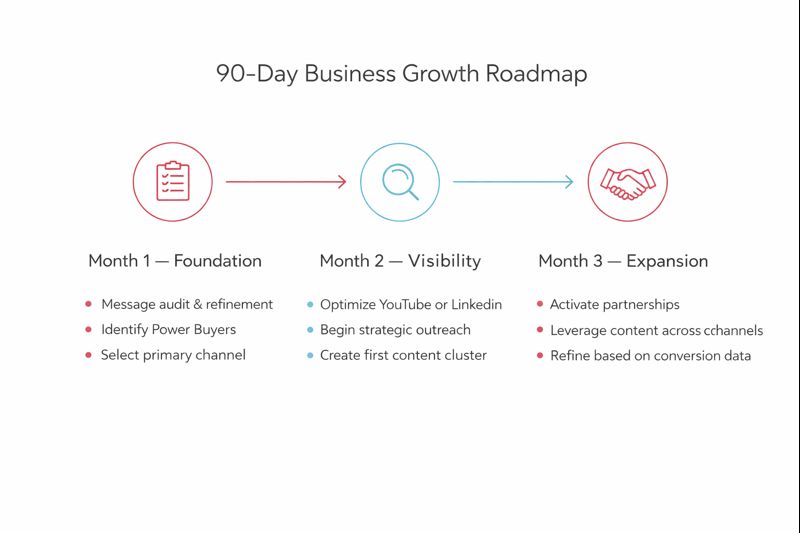
You don’t need to do all four strategies at once. Pick one or two that make the most sense for your current situation and goals.
If you’re strong at relationships: Start with LinkedIn relationship building and strategic partnerships
If you love creating content: Begin with YouTube optimization and use that content for partnership opportunities
If your messaging feels stale: Start with message refinement to ensure everything else builds on a strong foundation
If you have existing warm relationships: Activate strategic partnerships first for immediate impact
The key is choosing strategically based on your strengths, resources, and business goals—not trying to do everything simultaneously.
Want Implementation Support for These Growth Strategies?
I’ve created a comprehensive companion guide that breaks down each of these four strategies in detail with specific action steps, templates, and frameworks you can implement immediately.
Download the Complete 2026 Growth Strategy Guide to get:
- LinkedIn relationship-building templates and outreach scripts
- YouTube SEO optimization checklist with keyword research process
- Strategic partnership proposal templates and collaboration frameworks
- Message refinement audit with positioning update worksheet
- Implementation timeline showing exactly what to do when
Get Personalized Strategy Recommendations
Want to know which of these strategies would have the biggest impact on your specific business?
Book a complimentary 15-minute Brand Message Assessment where we’ll look at your current positioning and I’ll tell you exactly which strategies I’d recommend you focus on first based on where you are and where you want to go.
On this call, you’ll get:
- Specific insights on your current messaging and what’s working (or not)
- Clear recommendation on which 1-2 strategies to prioritize
- Immediate action steps you can implement this week
- Honest assessment of what’s preventing your next level of growth
Book Your Free Brand Message Assessment →
No pitch, no pressure—just strategic guidance from someone who’s implemented these exact strategies to double revenue and scale consistently.
About the Author
Fabi Paolini is a Brand Message Architect who helps established coaches, consultants, and professional service providers develop premium positioning that attracts Power Buyers—investment-ready clients who value expertise over price. Creator of the Angle of Mastery™ framework and Need-to-Have Formula™, she’s built a multiple 7-figure business using the strategic messaging principles she teaches. In 2025, she doubled her revenue, grew her LinkedIn following by 17,000, gained 30,000 YouTube subscribers, and enrolled multiple $25K clients through the strategies outlined in this article.
